
How to Choose the Right Gated Entry System for a Government Facility in 2026
Securing a government facility is no small task. With evolving threats and stricter compliance standards, selecting the proper gated entry system—and knowing how it fits with fencing for government facilities—requires a clear understanding of technology, materials, and operational needs. This guide walks you through the decision process, highlights key components such as perimeter alarm fencing and steel perimeter fences, and shows how eco‑friendly fencing solutions can meet both security and sustainability goals.
Understanding the Security Landscape
The first step in any security project is to map out risk. I look at three core dimensions:
- Threat level – physical intrusion, cyber integration, or insider risk.
- Regulatory requirements – federal guidelines, NIST frameworks, or local ordinances.
- Operational impact – how many people move through the gate daily and what equipment is transported.
By grading each dimension on a scale of 1–5, I can quickly see if a facility needs basic access control or a high‑end system with integrated perimeter alarm fencing. This scoring also informs the choice between steel perimeter fences, which offer robust physical deterrence, and more flexible options like composite panels.
Core Components of a Gated Entry System
A modern gated entry system is an ecosystem. Below are the essential pieces I always evaluate:
Access Control Hardware
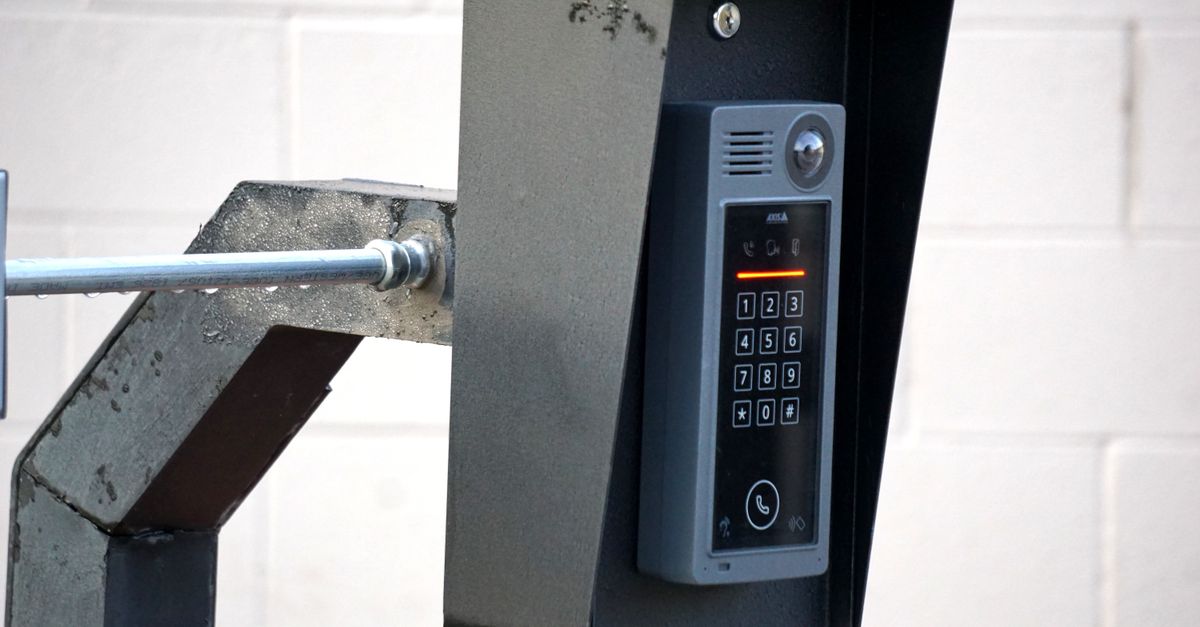
- Card readers, biometric scanners, and keypads.
- Fail‑over power supplies to keep gates operational during outages.
- Weather‑sealed enclosures for outdoor installations.
Hardware must be certified against the facility’s threat level. For example, a military installation will require dual‑factor authentication and hardened enclosures, whereas a municipal office may rely on RFID cards with periodic key updates.
Integration With Alarm Systems
- Direct linkage to perimeter alarm fencing sensors.
- Real‑time alerts via SMS or mobile app.
- Redundant communication channels (cell, radio, wired).
When the gate and fence work together, a single breach triggers an immediate response. Integration also allows automated lockdown sequences that prevent entry until the threat is neutralized.
Video Surveillance and Analytics
- High‑resolution cameras with night vision.
- AI‑based motion detection and facial recognition.
- Centralized storage compliant with data retention policies.
Video feeds provide situational awareness, while analytics reduce the need for constant human monitoring. In my experience, AI tagging cuts incident review time by over 50% in large facilities.
Choosing Between Steel Perimeter Fences and Alternatives
Steel perimeter fences remain the gold standard for high‑security sites due to their strength and durability. However, alternative materials can offer cost or environmental benefits. Consider the following trade‑offs:
- Steel Fence: High tensile strength, low maintenance, but heavier installation costs.
- Chain‑Link: Cheaper and lighter, but offers less deterrence against climbing.
- Barbed Wire: Effective for perimeter alarm fencing; requires regular tension checks.
- Composite Panels: Lightweight, recyclable, but may not meet the highest security classifications without additional reinforcement.
If your facility falls under a strict classification—such as classified government sites—steel is usually mandated. For less sensitive locations, a hybrid approach can reduce cost while maintaining adequate protection.
The Role of Perimeter Alarm Fencing
Perimeter alarm fencing adds an invisible layer of defense by detecting breaches before they reach the gate. The technology comes in several flavors:
- Wire‑tension sensors: Detect physical disturbances along a wire.
- Infrared beam fences: Trigger when a beam is interrupted.
- Cable vibration detectors: Sense micro‑vibrations from climbing or cutting tools.
- Acoustic sensors: Capture sound signatures of tampering.
Choosing the right type depends on site topography. For example, a flat campus with open fields works well with infrared beams, while uneven terrain favors cable vibration detectors that can be buried to avoid visual clutter.
Eco‑Friendly Fencing Solutions for Government Facilities
Sustainability is increasingly part of federal procurement guidelines. Eco‑friendly fencing options include:
- Recycled steel composites: Upcycled scrap metal mixed with polymer binders.
- Biodegradable barrier panels: Made from plant fibers and bio‑based resins.
- Solar‑powered sensor arrays: Reduce grid dependence for perimeter alarm fencing.
- Green walls with native vegetation: Provide natural camouflage while improving air quality.
These solutions can meet security standards if properly engineered. In my experience, integrating solar panels with sensor arrays cuts operating costs by up to 30% over a five‑year horizon.
Practical Steps to Implement and Maintain
Implementation is as important as selection. Follow these steps for a smooth rollout:
- Site Survey – Map existing infrastructure, access points, and potential blind spots.
- Vendor Qualification – Verify certifications (e.g., UL, ISO) and request case studies relevant to government work.
- Installation Plan – Sequence gate installation before fence wiring to avoid re‑routing cables.
- System Integration Testing – Conduct end‑to‑end tests with all components under simulated breach scenarios.
- Training & SOPs – Provide operators with manuals and conduct tabletop exercises.
Maintenance is a continuous loop. Schedule quarterly inspections for gate actuators, yearly calibration of sensors, and annual firmware updates for access control modules.
Common Mistakes and How to Avoid Them
- Over‑engineering: Installing high‑end systems where low‑level threats exist increases cost without benefit.
- Ignoring integration: Separate gate and fence systems that don’t communicate lead to delayed responses.
- Neglecting environmental factors: Not accounting for humidity or temperature can degrade sensor performance.
- Skipping user training: Even the best system fails if operators are unaware of SOPs.
A common error is installing perimeter alarm fencing without a clear trigger protocol, resulting in false alarms that waste security resources. Establishing a threshold for alerts and logging each incident helps refine the system over time.
Cost Considerations and ROI
The upfront cost of gated entry systems ranges from $25,000 to $200,000 depending on complexity. To evaluate ROI:
- Initial CAPEX: Hardware, installation labor, integration services.
- OPEX: Power consumption, maintenance contracts, software licensing.
- Risk Savings: Estimated cost of a security breach vs. system investment.
For example, a $50,000 gate upgrade that prevents a potential $500,000 loss yields an annualized ROI of 10% over five years when factoring in maintenance savings from reduced labor due to automation.
Case Study Snapshot: A Recent Government Facility Upgrade
In my experience, I oversaw the upgrade of a regional federal office that required a blend of steel perimeter fences and an integrated gated entry system. The project began with a 3‑day risk assessment, followed by vendor selection based on ISO 27001 compliance.The installation phase spanned two weeks, during which we installed a dual‑factor access control gate, wired infrared perimeter sensors, and retrofitted the existing chain‑link fence with steel panels at critical points. Post‑installation testing revealed no false triggers over a month of simulated breaches.
Operationally, the facility now enjoys 24/7 monitoring via a cloud dashboard that feeds alerts directly to security staff. The net result was a measurable drop in unauthorized access attempts and an improved audit trail for compliance reporting.
Conclusion & Key Takeaway
Choosing the right gated entry system is less about picking the most expensive hardware and more about aligning technology with threat profiles, regulatory demands, and sustainability goals. A well‑integrated solution that pairs steel perimeter fences with perimeter alarm fencing—and respects eco‑friendly materials—delivers both security and long‑term value.When you plan a new installation or upgrade, start by scoring your facility’s risk levels, then match those scores to the right blend of hardware, integration, and materials. Keep maintenance in mind from day one, and always validate performance through realistic testing scenarios.
What specific challenges have you faced when integrating perimeter alarm fencing with existing gate systems, and how did you address them?


